

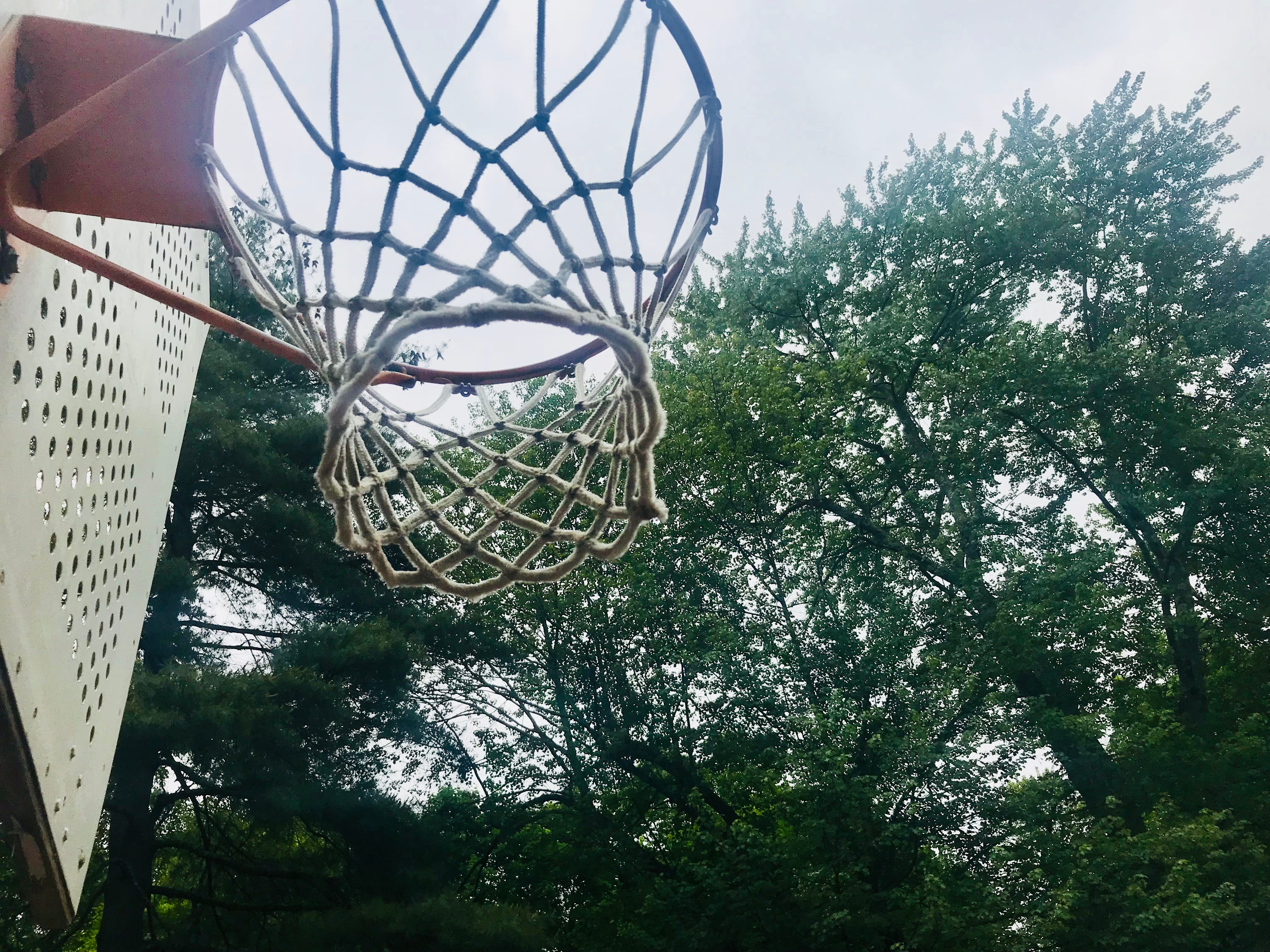
Today I was in-transit between meetings when I got a reminder text for a virtual therapy session that was starting in ten minutes—shit. I’d forgotten. My therapist is traveling so it wasn’t our usual time and we rarely meet online. I looked up at the underside of the Williamsburg bridge where I was about to hop on a bike. As luck would have it, I was also right by Gulick park (aka “the Godfather of Basketball”) and the court was empty. We had our session, I cried about my family, then sat there alone for a few minutes under the hoop. This feels right, I thought to myself. To be broken open on the court. To feel safe here. I wished I’d had a ball. I miss playing so much.
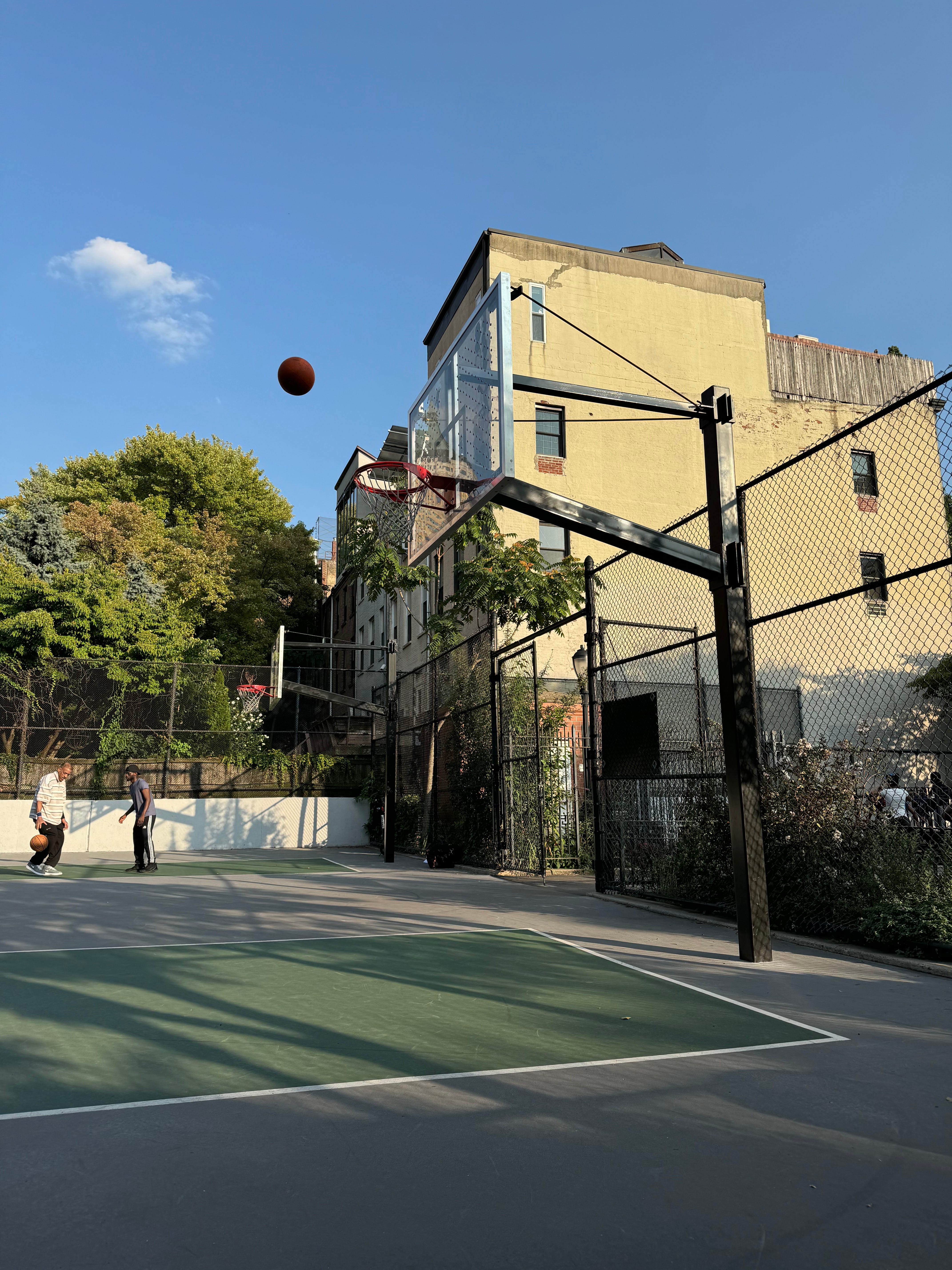
It’s been months since I’ve played in my regular game. Our captain experienced unexpected life changes and we haven’t been sure when / if we’ll bring the league back. Some of my teammates and I got together over the winter months we usually spent crammed together inside of an elementary school in Little Italy. We didn’t play, just talked. It felt a bit wrong to play together without the group, but as the uncertainty continued on, me and a friend started our search for a new regular game to join together and plan to try out a few options over the coming weeks. As a not-really-amazing player who is also coming off of bed rest, it’s a bit intimidating to walk into a new game, unsure of the expectations the players will have and if I can keep up, but I’ve been taking some runs (re-listening a lot to Jamila Woods’ song “Headfirst” and the whole of Danny Brown’s Stardust, especially “Lift You Up”) and long bike rides and just trusting my body will remember what to do. I haven’t been truly nervous about something in a while, and I felt a swell of gratitude today of being reminded of how good it feels to walk up to a line I’m unsure of, to be out of my depth, to remember that rush that comes right before crossing over (cue Maggie Rogers’ “Shatter,” and, for that matter, “Anywhere With You,” which also happen to be in the running rotation along with Sampha’s “Evidence,” a treatise on just getting out of one’s head and doing, along with Hozier’s, overly fittingly, perhaps, “Run.”)
Maybe that’s what this pending change of season we’re approaching here on the east coast is all about—the swell just before the break.
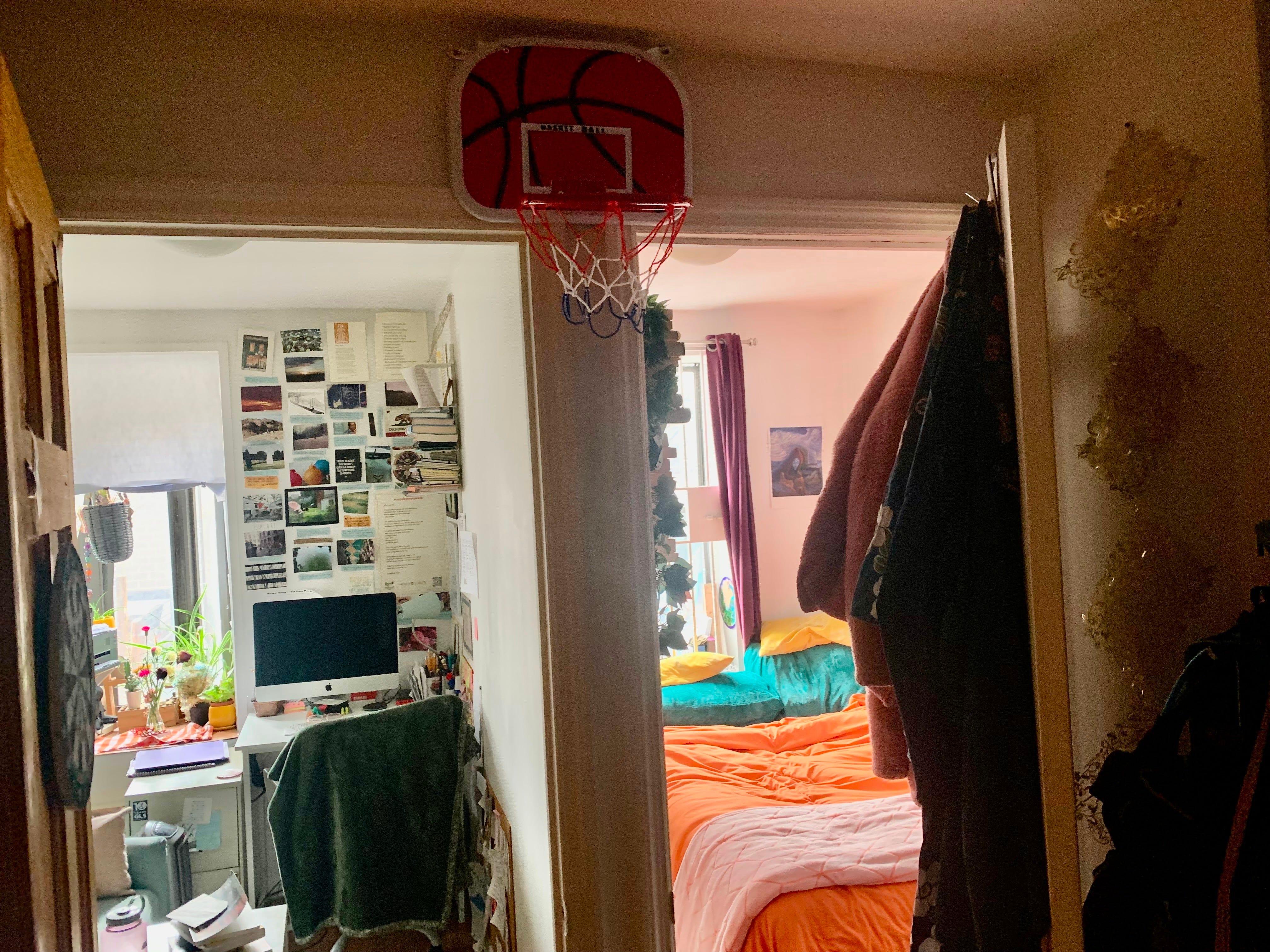
Last summer, I’d met a guy who’d invited me to play in a game he ran in my neighborhood. It was a big group. We ran drills and played knockout, which I won, I think to his surprise, and as I sunk my shot from behind him in line I knew it would very likely be the last time we played together (it was).
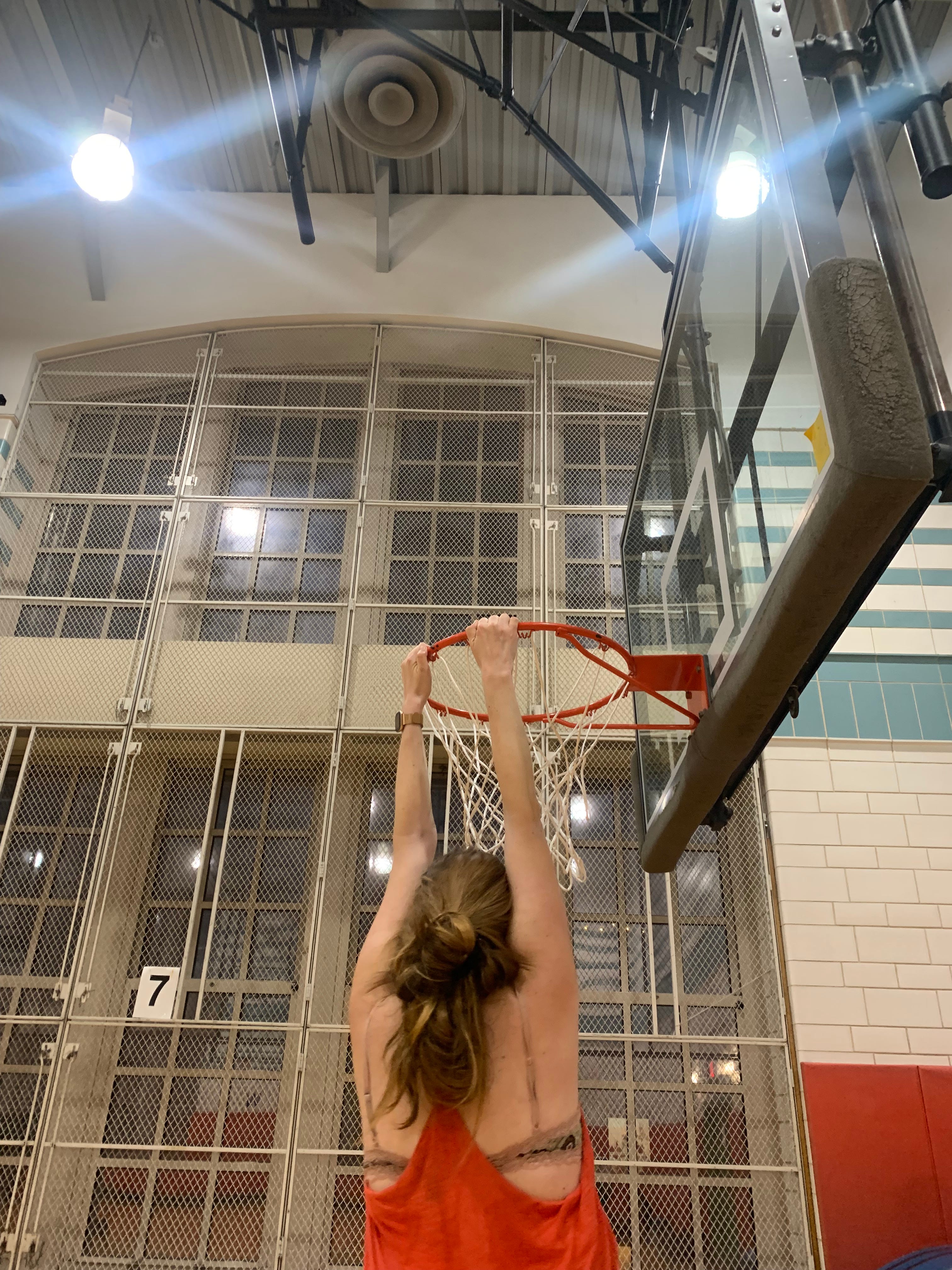
The social politics of pick-up is why I’ve always leaned into playing on womxn-only teams. Like I said, I’m not even that great, and as much as I love the spirit of a pick-up game, there are rarely games I pass on the street that I feel I’d be evenly matched for let alone welcomed into, though here and there I still bring my ball to courts and shoot around alone.
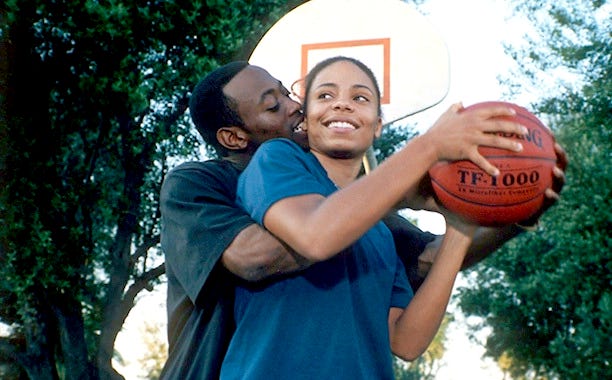
The league I played in in my neighborhood was notoriously womxn-only but we’d regularly have male coaches and players reach out to “train us” or “teach us,” because even as popular as Liberty is now in NYC and as good as a movie as Love and Basketball is, there is a reason our captain always said no to these offers. Sometimes you just need a bubble.
The last weekly game I played was in my old neighborhood in Philly. I became friends with one of my neighbors who organized a team who played at the court on Lombard just down the block from me. I told him how when I was a kid I wanted to be a basketball player—not a woman basketball player, but a basketball player. After school, I followed my older brother and his friends to the cracked court behind our old elementary school. I was eleven years old and my grand entrance into the world so far was as an out of shape tween in jelly sandals.
I watched as they swirled around each other. I’d never seen men look graceful before, so close to vulnerability as they did playing basketball. At the same time, they seemed to know the power of their bodies and were strong enough to push past whoever was guarding them. They shot three-pointers and ducked under each other’s pits for lay-ups. They chased air balls off into the woods.
When I finally confessed to my mother that I wanted to play basketball myself at the start of middle school, not just be a fan, the first thing I did was ask the coach if my number could be 23, like Michael Jordan. We were the nerd team: Saint Ann’s CYO. When the coach said it was time to scrimmage, I looked around at my teammates, waiting for a cue, but the confusion was shared across the lot of us. Our Soffe shorts were rolled over only once (twice was cool). A scrawny girl whispered to her neighbor, asking if she had a hair tie. We were not prepared to scrimmage. Hardly any of us spent our free time logging miles or practicing our technique. I, for one, spent my weekends having sleepovers and watching The N, moving from the couch only to sneak more chips from the variety box my mother had bought from Costco as Degrassi flashed across my screen. But when it came to the idea of basketball, I felt a murmur, an excitement, a movement in my chest I couldn’t ignore.
At our first game, the tall girl who’d been made center by default dribbled the ball out of bounds no less than five times. Eventually, she was benched. As the second tallest, I was put in. I’d forgotten to tape bandaids over my pierced ears, which was a rule in the league. The ref stopped the game, retrieving bandaids from the First Aid kit and made a show of me putting them on. That game, I managed to make a few lucky shots. We only lost by ten. For this achievement, at the end of the season, I was given a medal: MVP.
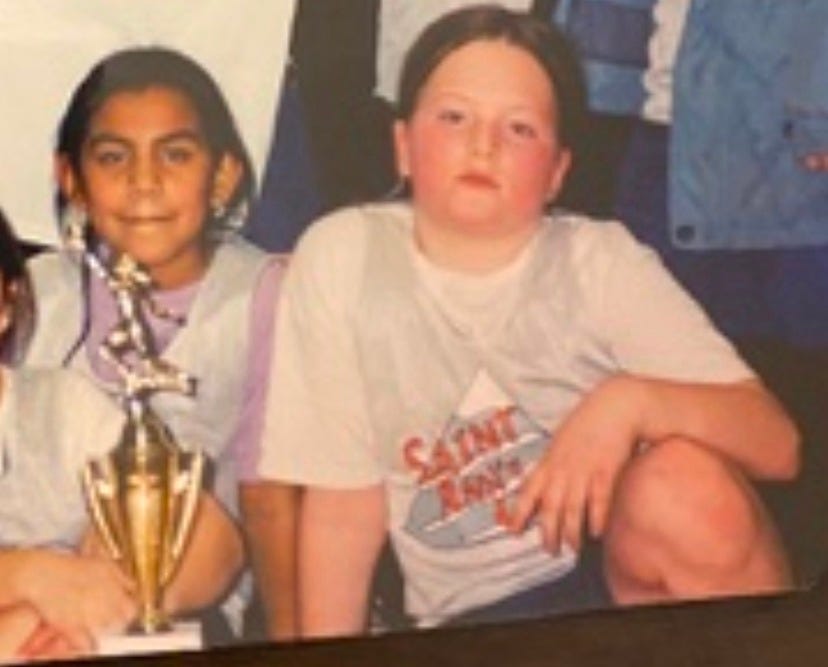
I placed my trophy with my Michael Jordan doll on my bookshelf and waited for summer to come. Maybe I could keep up at the basketball court after all. Maybe this is who I’d be.
The week after our season ended, our coach mailed out a flyer for a summer youth clinic at the local college. I showed the paper to my mother and begged to go, feeling guilty for the cost. Money was tight since my father received his terminal diagnosis. Our family’s insurance was gone now that he was too sick to teach and my mother was self-employed as a therapist. But going to the basketball clinic felt like a need. If I could get stronger, if I could keep up with college athletes, if I could learn the plays and how to shoot, I could endure my life.
I didn’t know about Teresa Weatherspoon until that summer camp despite her being one of the most famous women in the league. She appeared at the center of the court as we ran sprints across the slick wooden floor. Weatherspoon was one of the top fifteen players in WNBA history. After lunch, we lined up to have her sign our jerseys. When she got to mine, she smiled at the number, “Surprised you got this one,” she said, laughing, then signed her name across Jordan’s big red numbers. I hadn’t known there was a woman I could idolize, that in another life perhaps I would have gotten her lucky 11.
Weatherspoon made The Shot, a historic half-court game-winning shot in the 1999 WNBA Finals. I knew it was going in when I threw it up, she said moments after releasing the ball. The place just got so quiet, she finished. I thought about that delicate moment stretched out thin with hopeful silence, how Weatherspoon looked around at her teammates before registering the success of her shot. Everyone was frozen. What they were waiting for was a miracle, a divine alignment nobody had ever seen before. And there it was.
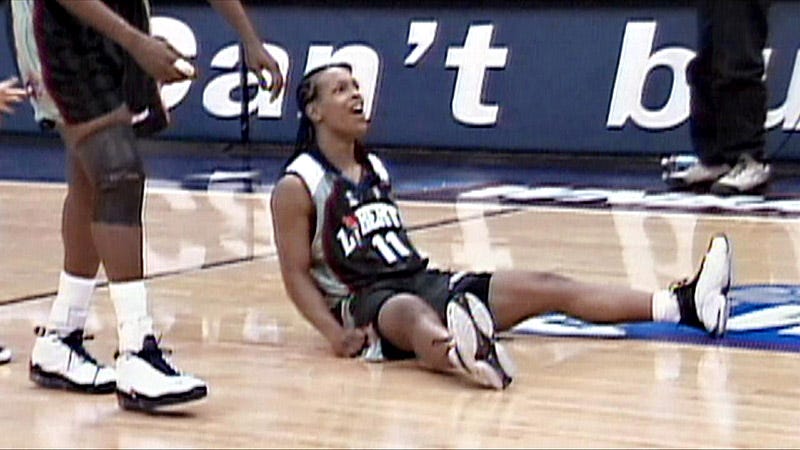
Reflecting more on the moment, Weatherspoon revealed she doubted she made the shot, her body seated on the ground after releasing the ball, wondering if the reason nobody was dog piling her was because it’d been a miss. She said it felt like a half hour passed before the stadium reacted, before she stepped fully into her achievement. Twenty years later, Weatherspoon was finally inducted into the Naismith Memorial Basketball Hall of Fame: I’m so thankful to God that he actually knows my name, she said as she started to cry. I’m so glad this game will remember my name.
After the clinic, I asked my brother and his friends if I could sub in for a game. Hesitant, likely forgetting I was even there, they agreed. The shortest guy on the court—a redheaded, freckled kid, checked me in. I passed the ball back hard, shocking him with the force of my return.
Alright, he said, guarding me. First to eleven wins. I passed the ball quickly to my brother who sunk the ball from the top of the key. The redhead sprinted under the net for the rebound, then dribbled it back up the court. I stood there, waiting for him, trying to block him, but he outran me. My brother got us the ball back, sunk a three-pointer, got the rebound, and then shot a few more. Finally, he passed the ball to me. The redhead charged me, cornering me under the hoop. He slapped back at my arms as I jumped up to edge the ball in, but I couldn’t get past him. I passed the ball to my brother, running back up the court. He passed the ball back to me. For a moment, I was free of the redhead. I made The Shot. My Shot.
But I landed hard on my knee. My skin opened up as an inch-long wound. Hot blood inked down my leg. The boys watched me with pinched faces, grossed out. I embodied the pain, liking the grime my body could produce, the vulgarity. I didn’t care how they saw me. I liked how I saw myself: I was tough.
It’s cool, I said, plucking a leaf from the ground and using it to dab at my cut. I pressed down until the bleeding stopped, not cleaning the blood caking on my leg hairs.
What, are you like gay now? the redhead asked me. The power of making the shot, the winning point, still floated in the atmosphere. My success translated to an uncomfortable reality, and the boys struggled to make sense of themselves inside of it. It wasn’t possible that the girl had won. And if it was, if girls were good at basketball, or any sport, they were untouchable, illegible, unfuckable. If you did end up being better than the guys, you would be confined to “women’s basketball,” which was safe for men because it meant even at the top of your field, you still weren’t as good as the NBA. I might be like Teresa, but I’d never be like Mike.
I stopped playing basketball in high school. My brother still took me with his friends to the court to play when I visited him in Minnesota at his college. Sometimes, we’d go to the elementary school when he was home for summer break.
In college, I signed up to try out for the intramural leagues, but the women’s team was full of ex-varsity players, women who’d kept with the sport, who hadn’t cared what people called them, or maybe had but played anyway. I’d abandoned the version of me who could’ve kept up with them. Instead, I swam laps at the pool, practiced yoga, walked miles to Ann Arbor’s Huron River from campus and back.
But during the summers, I worked as a counselor for the university’s academic camp, which came with a free room and a meal plan. I was back with the nerds. The only other students in our dorm were the athletes doing summer training. That year, the one where our basketball team would go to the final round of March Madness, we watched Trey Burke and Mitch McGary go to and from the gym. I felt something stir. I asked my colleagues if they wanted to start playing, and so after the campers went to sleep, we’d sneak down to the court and shoot until campus security kicked us off.
When I got to graduate school, I was the youngest fiction writer in my MFA program and one of only four women in my year. I’d moved to Philly, a city where I didn’t know anyone, to attend the program and lived alone in a downtown apartment that was half of my living stipend. I was surrounded by male peers who often explained the struggle of being a woman writer to me while cutting off women in the workshop.
I wondered if I’d made a mistake. I’d nearly rejected my offer from the program. Maybe I should’ve moved with my friend to the woods to live cheaply as an artist or followed the convoy of English majors from my university who were staffing Brooklyn’s coffee shops. Still, the degree seemed like a pathway to something else, a way out of my administrative assistant job at the campus’s women center, a step closer to being a full-time artist and away from being my musician boyfriend’s groupie. I wanted to be a writer not a women’s writer. I wanted to be a filmmaker not a female filmmaker. I wanted to act not be an actress. I feared becoming a genre within my own life’s work.
As I walked to the grocery store from my new apartment to buy food from the hot bar, still awaiting the arrival of my dishes in the mail, the sun was starting to set on my block.
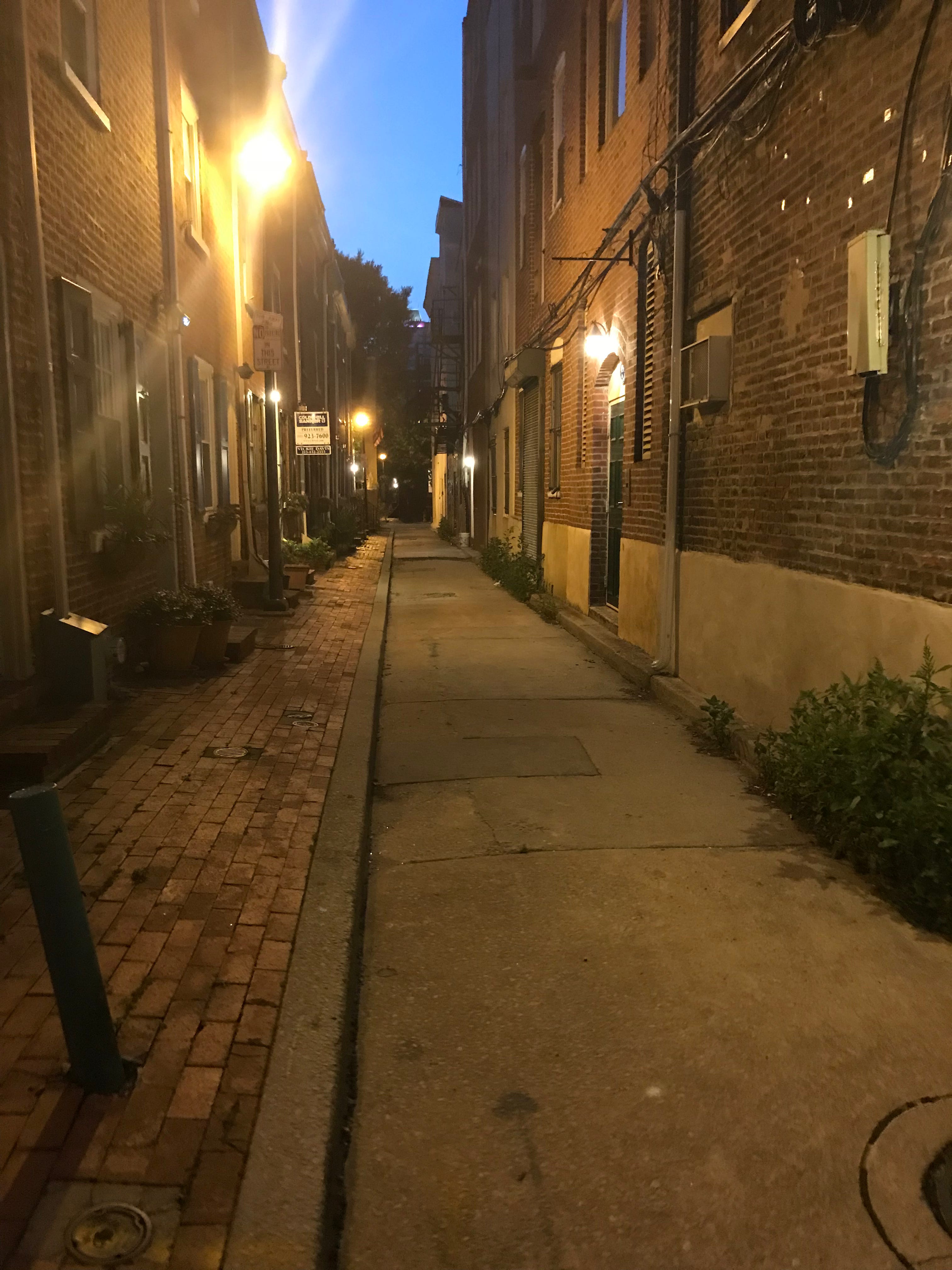
I noticed tiny globe lights flickering on, illuminating a patch of trees. I followed the lights to a park. A basketball court where I’d soon play with my neighbor’s team. As I slowly said yes to being an artist, I’d come home after workshop, lace up, and play—
j