A Winter Solstice Return
Launching Season Three of Conversations With Animals feels...like the final thing I'll do before I burrow. Thinking about: jack rabbits in New Mexico, intersectional ecology, and spiritual practices.

Here before I wasn’t. Gone but still waiting. I am somewhere, a mazed presence. Fast, unseen, a warmth that passes. Blown by a breath released a moment late.
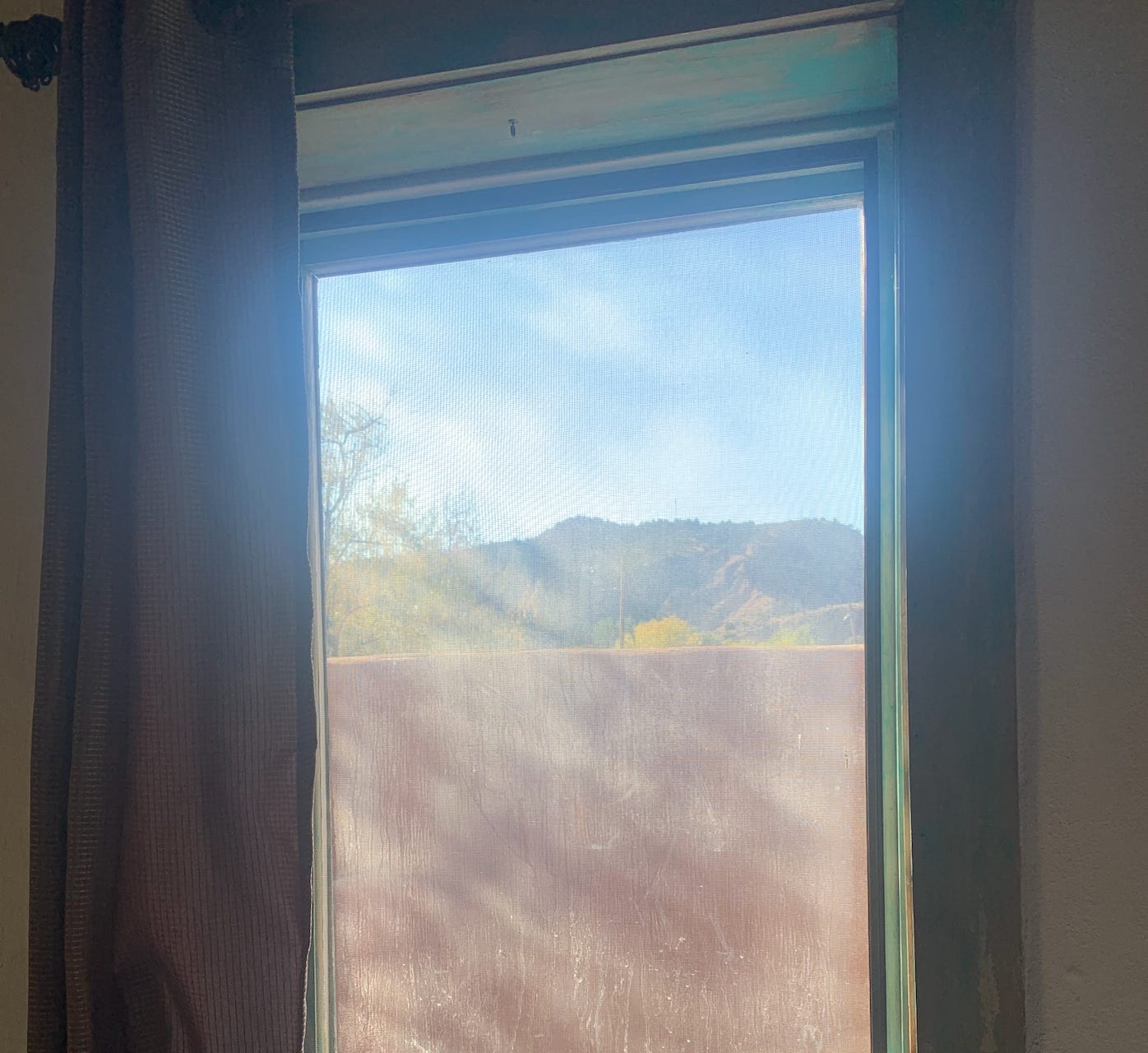
There's a lot I could write about the second half of this year, but I'll start with October when I landed at one of the smallest airports I've ever been to with my friend P. We completed our 200-hr yoga teacher training together just shy of a year before we stepped off that tiny plane in Santa Fe and made our way into a silver van driven by a man dressed head to tow in…silver, like he and his car had coordinated, which I loved. What I mean is: he seemed intent on being conscious of the environment around him, even his car, and we were grateful to feel as though we were being initiated into our next few days of meditation, martial arts, and yoga practice with a group of strangers who were waiting for us an hour outside of the city to which no direct public transit went.
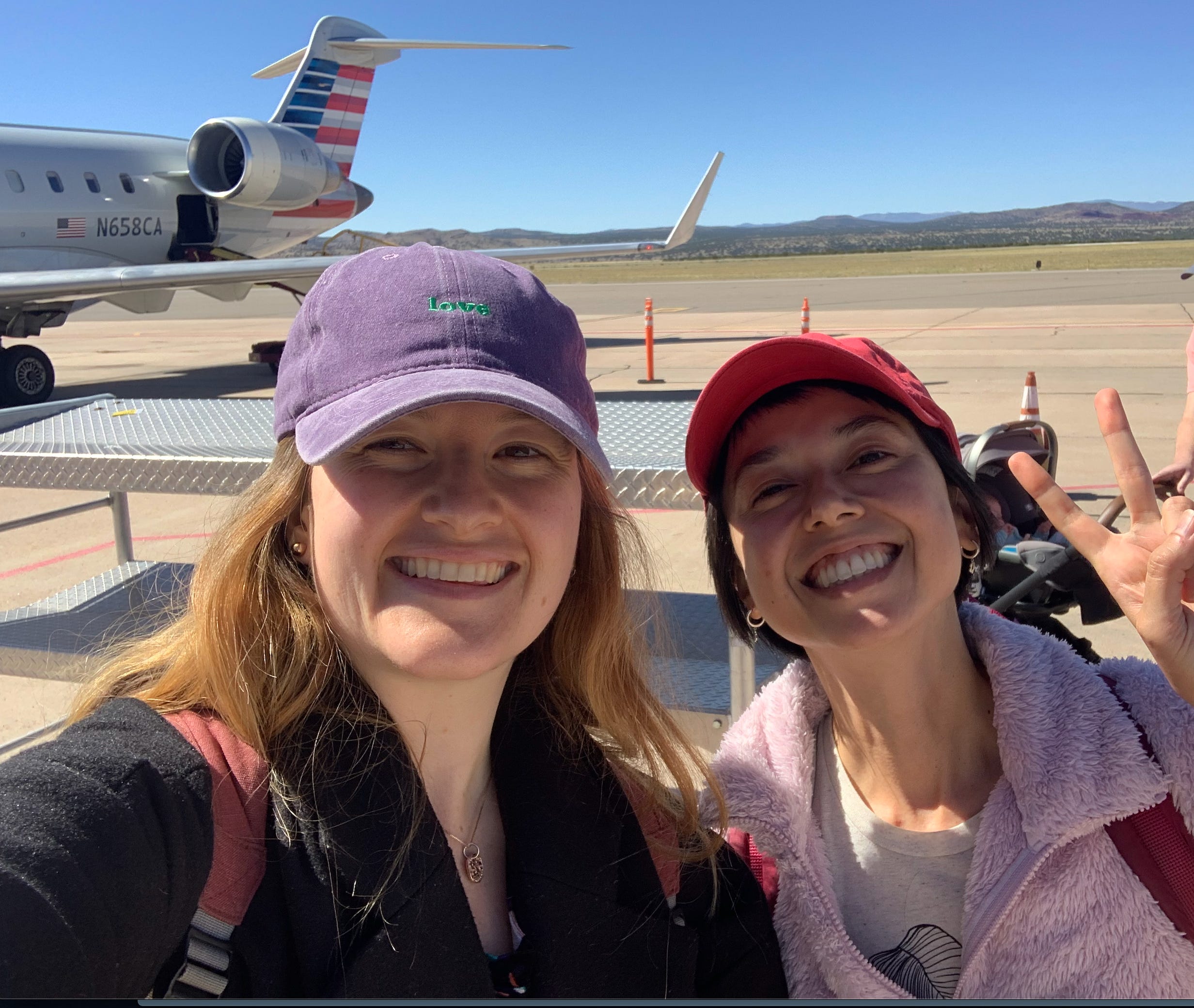
The man was eager to accept our offers of trail mix as he blasted his psychedelic rock music. I felt Hunter S. Thompson’s hand authoring our desert road trip, but the drive was tempered. He was attentive and familiar with the roads—not manic like a Thompson character would be—quietly pointing out the Santa Fe Opera House, whose roof was shaped like an alien watchtower, and the variety of junipers scattering the mountains.
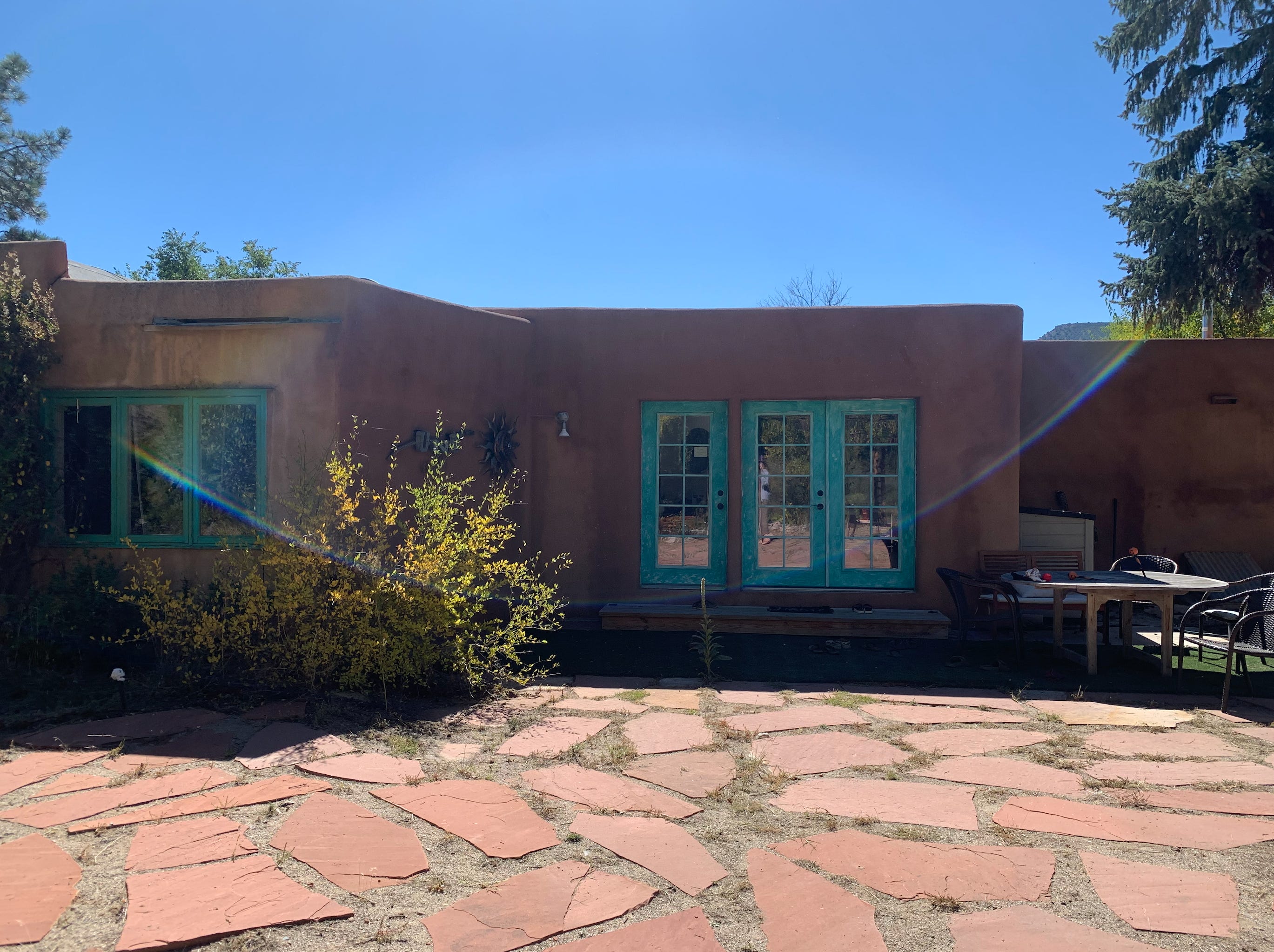
We were some of the first to arrive at the adobe house, said our goodbyes, then went to our separate rooms to settle.
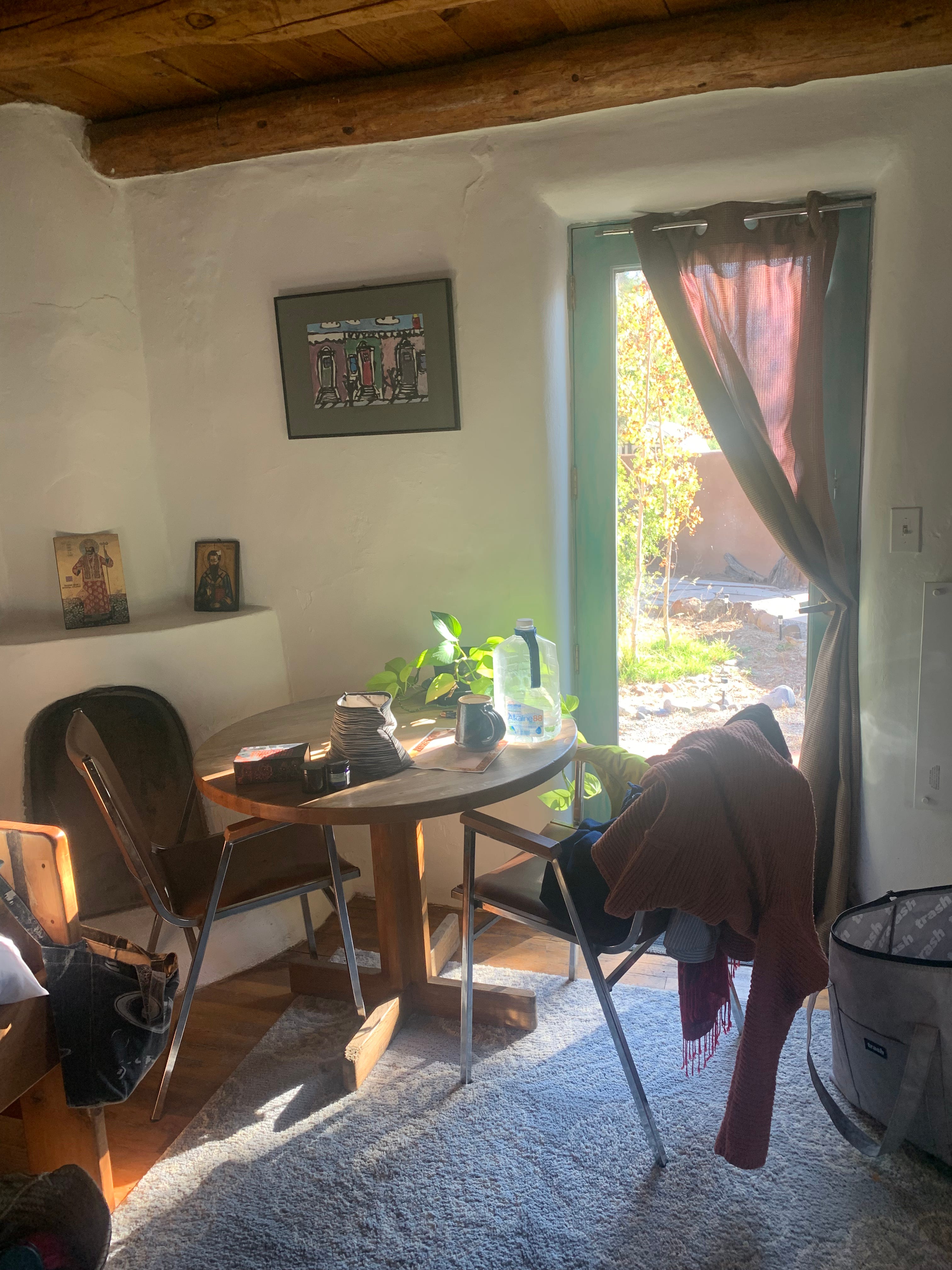
I’d brought with me Nicole Krauss’ Man Walks Into a Room, and sat at the small table to read, the air hot and dry as the sun sat as a companion next to me. The book was a strange one to read in the desert as you spend hours of your day in meditation or engaging in other contemplative practices. It’s the story of a man from NYC (a thirty-something English professor, no less) who wakes with a brain tumor that erases his memory up until late childhood. He comes-to in the Las Vegas desert, where he eventually returns to use his cleaned out brain to be the site for a memory transfer. His journey is one of the loneliness of detachment, which could also be seen as the journey of a spiritual seeker. That advice, and urge, to go far away into yourself can also be a tactic of avoidance—or it can be one of deepening.
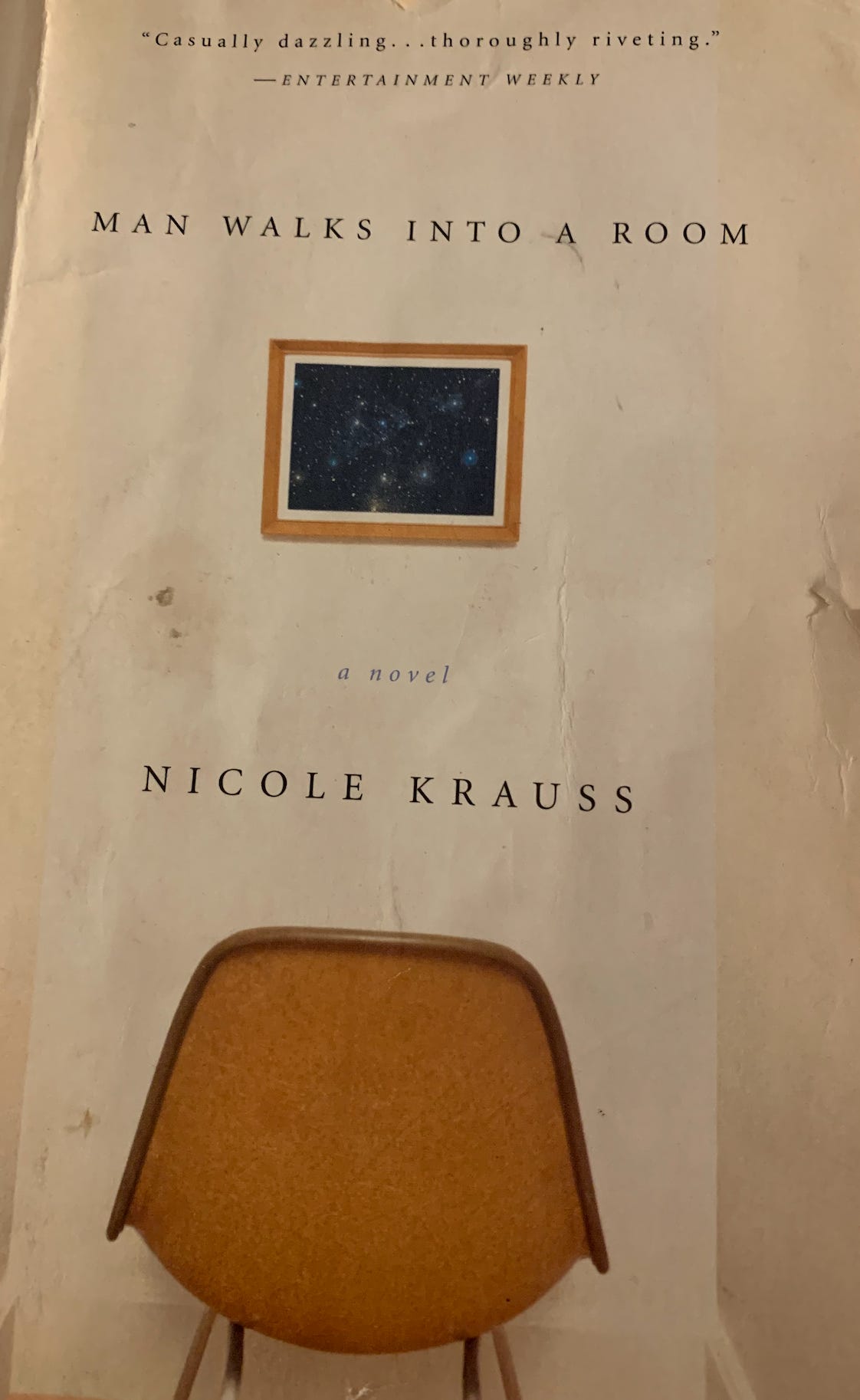
But even in his sweeping loss of his previous life (no more teaching, no more dinner parties, no more retained knowledge from a PhD) I found his character to ultimately hold tight to many of his nonverbal memories, such as the love of his wife, the grief of losing her companionship as their marriage crumbles as a result of his memory, his desire to say goodbye to his mother who he has already buried as another version of himself. What I take instead is perhaps there are some connections (i.e. love) that are possible to identify with very little prior information, that it’s certainly possible to keep thees connections in tact with much less than you think you might need (or see) in order to know that love was (or is) present.
It’s also the sort of book that pulls you into another dimension. When I returned, as I searched for my next read—still lost in the timelessness and the meta-nature of transplanting a memory into another’s mind (as books and language are the most efficient at, perhaps) I had a strange encounter at the library of finding that someone with my name and initials had been the last to check out a story collection I was drawn to, This Is a Voice From Your Past.
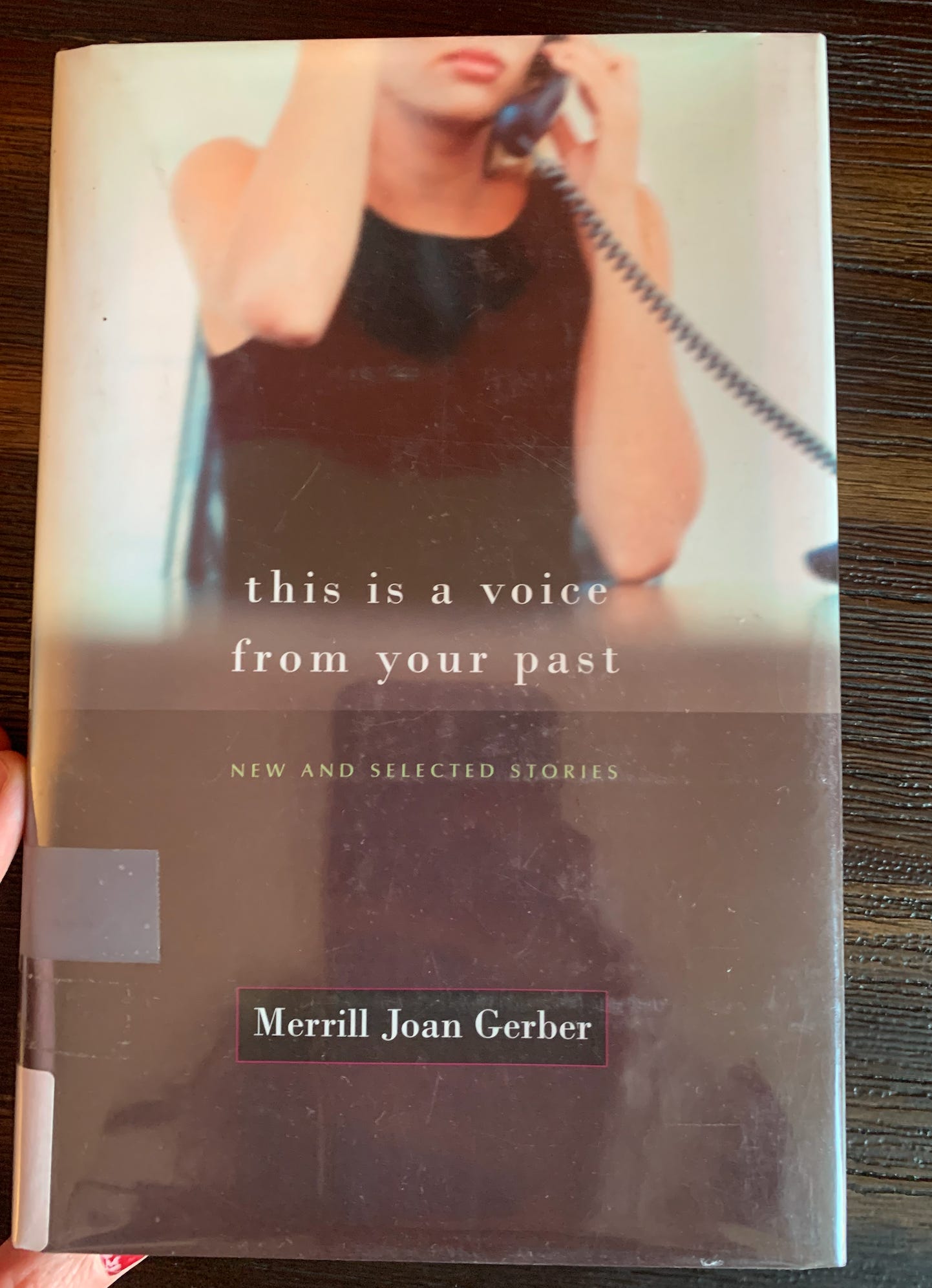
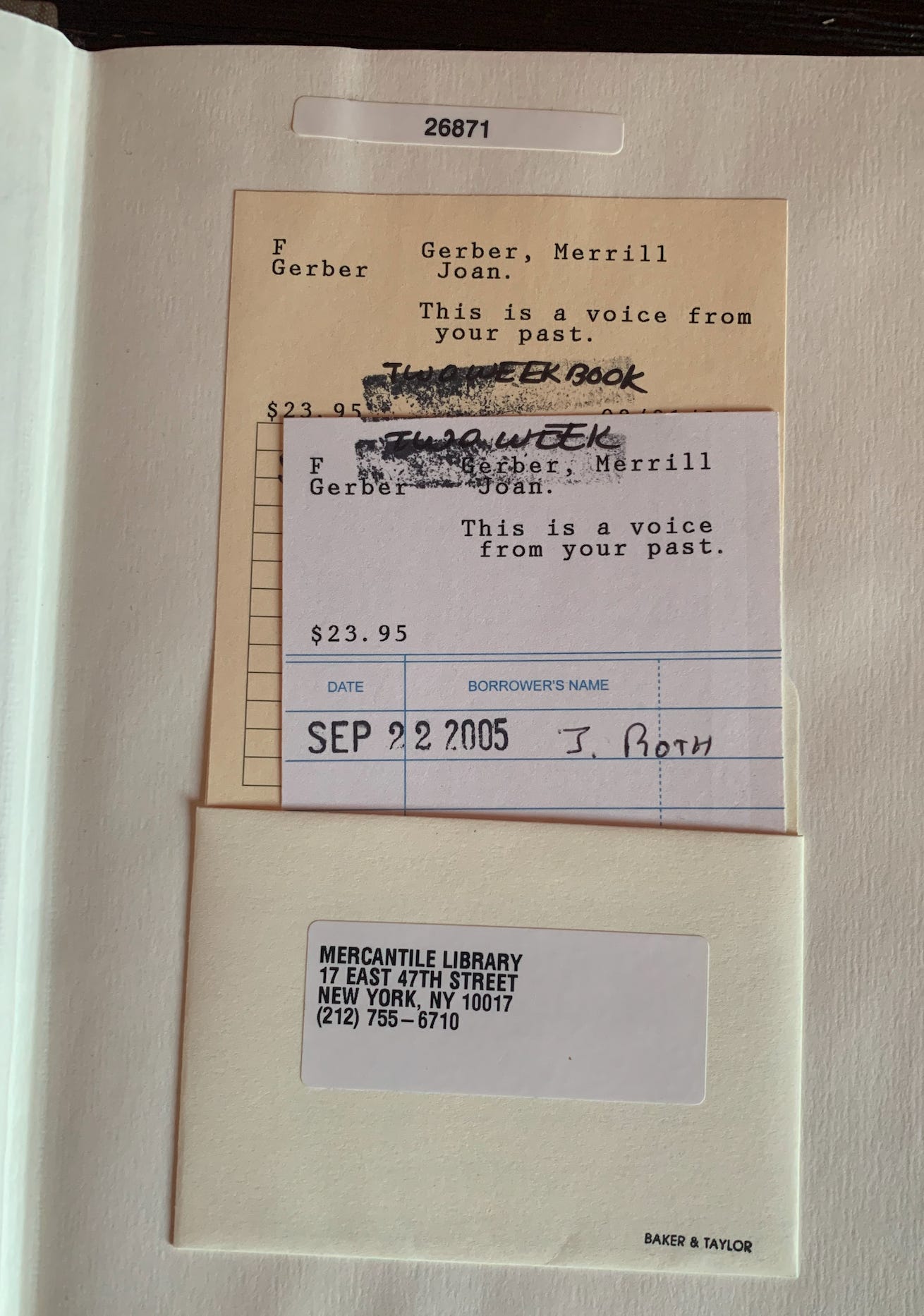
Hi, past.
Guess we have all been here before.
One day after plunging into the (quite) cold Rio Grande River that ran through our backyard, I went for a short hike with our martial arts instructor, A, who led me up a trail softly packed with dirt. Barefoot, we ducked a variety of cacti and other violent-looking dessert growth, when he mentioned that jack rabbits lived in the area. Bunnies, too.
Not something I expected. My association with the creature had always been with their fragility, their uncanny softness. And yet, their teeth were perfectly designed to eat around the glochids (the hairy parts on cactus). To live on what others fear.
I’ve been reading a few myths about jack rabbits to get closer to them and understand how they’ve been responded to by other cultures and storytellers.
In the Tales of White Mountain Apache, the jack rabbits are found by coyote taking out their eyes and throwing them up in the air before catching them again in their sockets, which made coyote want to try. They ignored the rabbits’ warnings of throwing the eyes too high and getting them caught in the tree, which they did, and led to the coyote’s yellow eyes and poor perception (such as confusing swaying plants in the distance for people, etc). The jack rabbits here were playful, but wise and cautious (reading from Greenfeld, Philip J., Lavender-Lewis, Bonnie, Brandt, Elizabeth A., Lupe, Ronnie, Goodwin, Grenville’s work here, just to mention).
Marjorie Tallman’s Dictionary of American Folklore has some very short, perhaps radially significant entries about jack rabbits, bunnies, etc. For instance, the phrase “bunny meat” or “rabbit food” to describe meals without “any real meat” meanwhile the bunnies are out there in the a desert making gnarly meals out of materials most meat-eaters can’t handle.
There’s also several entries on rabbits being used for good luck (well, cutting off their left foot and carrying it around, of course). Then, a record of the Gullah tribe in African folklores who often used the rabbit as a trickster figure, which feels to me how I would most closely identify the quick-moving energy and dexterity of rabbits I’ve encountered in the wild (maybe also why I don’t have any photos of them).
Ultimately, learning about jack rabbits imbues me with a sense of optimism. Of hope. And that’s why it feels so right to release this letter and the first episode of Season Three of Conversations With Animals during these Solstice days. I’m thinking of how excited I was to finally share what I’ve been working on with you all last night as I rang bells with my friend S at Elizabeth Street Garden. I’ve been at my desk for nearly ten hours a day the past few days grading three sections of writing courses and prepping four more for the spring. Had I not committed to ringing the bells, maybe I would’ve continued to slip into the endless work. But, I was committed to marking this pivotal point of the year. I would say I casted a sort of wish, but I don’t think you’re supposed to share those, right?
So I won’t, officially, but I can share that the guest for S3E1 is Isaias Hernandez, and we spoke before I left for my New Mexico trip. Our conversation covers queer ecology, the cruelty of American monocropping (not just our yards but our souls, in short), and mushrooms. Please check it out on my Substack podcast page, and also subscribe at any and all of the following platforms:
Apple, Amazon, IHeartRadio, Spotify, YouTube, GooglePodcasts, & RadioPublic

For those who have been here awhile, here’s what to expect moving forward:
this letter and the podcast will stay free! but I’d love to have you as a subscriber. There will be more to share—deeper conversations on animals and my process of noticing them in my life and stories around us.
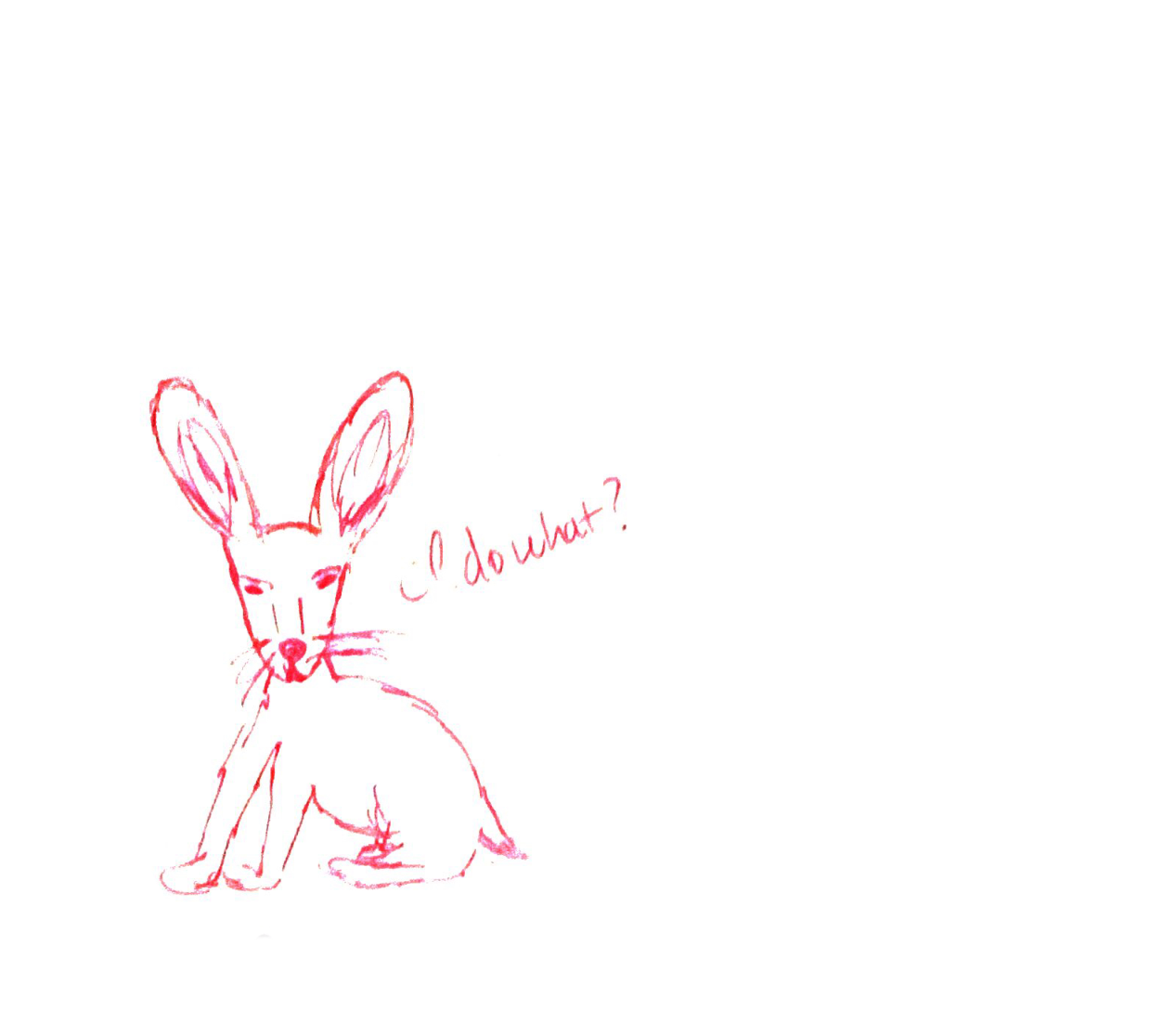
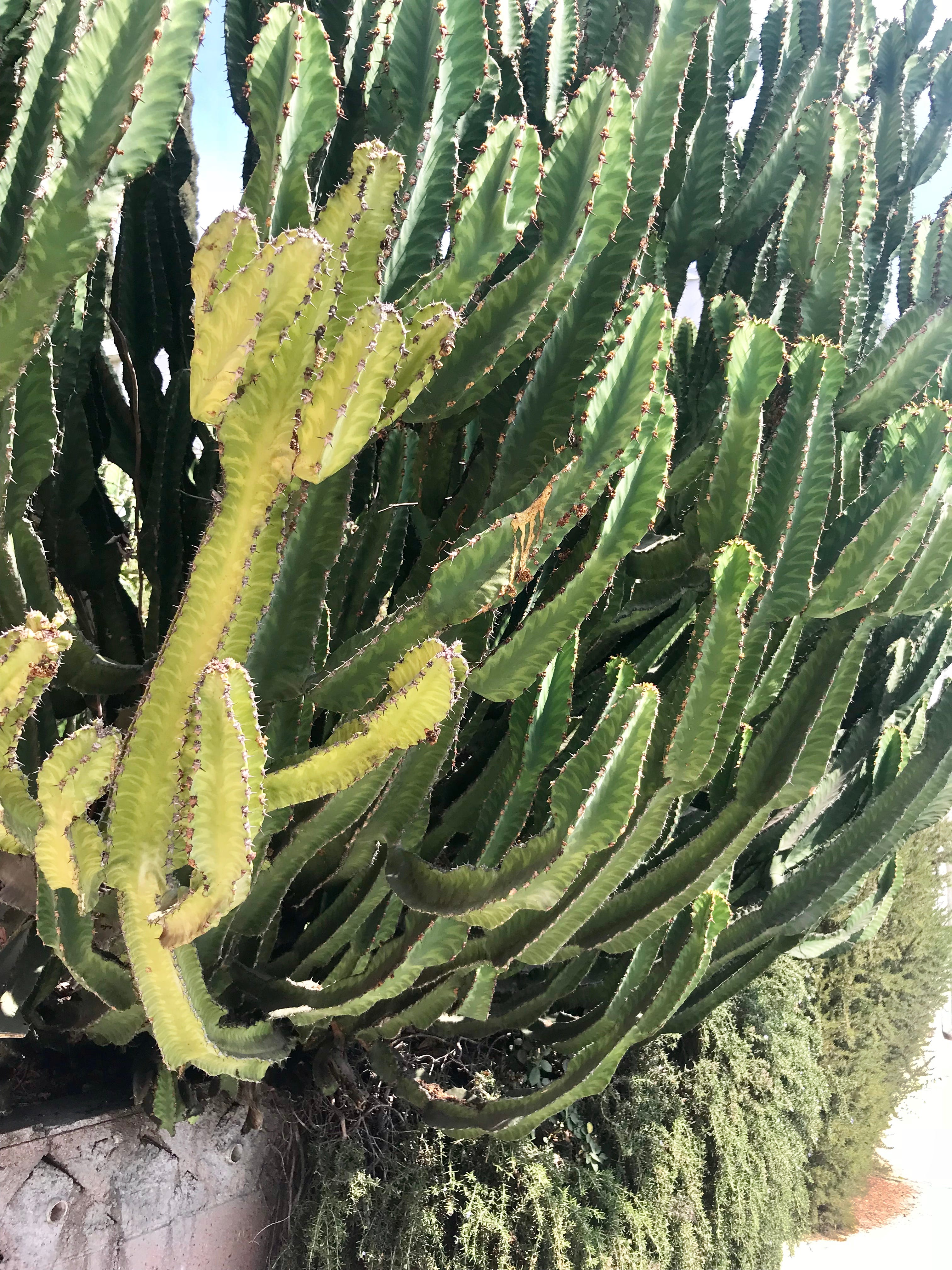
there will still be embodied animal-of-the-month narrations at the start of the letter; they will be in italics with an image (I just didn’t get one of a jackrabbit! The best I could do is this photo of a cactus from a trip to Los Angeles years ago because I also didn’t have my phone on for most of the time I was in New Mexico—also didn’t actually get to see a jack rabbit). There will still be an anthropomorphized doodle of the animal-of-the-month at the end of the letter (because why else write this, really).
a few features are launching that will only be available to paying subscribers: starting at the end of January I will begin releasing a monthly analysis of an animal in pop culture (cue pet videos, scientific discoveries, movies, music, and more), alongside the next letter I will release the first re-print of my literary and critical writing (which engages with environmental and animal themes, you’ll see) starting with something special for all the theory nerds out there, and lastly I’ll also be offering some monthly wild things like extra animal doodles, interviews, and things we can’t even dream up yet. I’m telling you, 2024 is going to be fresh and expansive, let’s see how weird it can get.
merch is coming…because you love stickers don’t you? and as much as I love the intimacy of a letter, I don’t yet have a book in the world, but I still love tactile, physical things—material ways of connecting through ideas and intentions. Books being one of my favorites, and so by creating some things to share with you while I patiently wait for the publishing gods to bless me (timing is everything, right?), I think offering some doodled stickers and hats would be a fun way to make this project feel a bit more…real? You know what I mean, I think. Don’t you? Maybe it is just capitalism, again.
Alright. In short, I’m very grateful to be here with all of you, however you choose to stay with me, and I appreciate you continuing to listen me talk to, with, and among all of these animals (ourselves included). Stay wild, and enjoy that gradually emerging sunlight.
Bye for now. I’ll see in January.
With love,
Juliana