

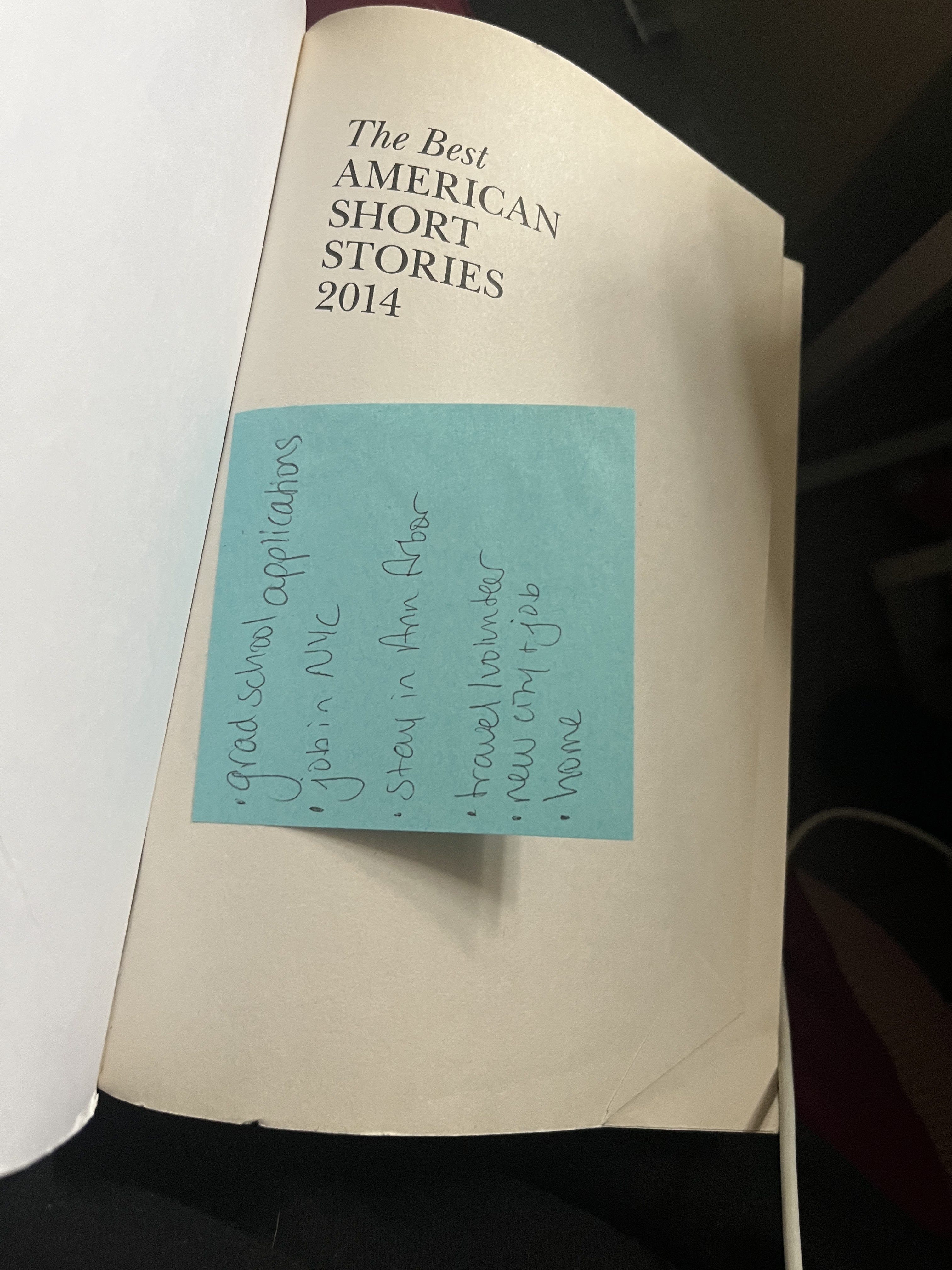
organizing files at a psychiatry office, New York Fashion Week model, developmental editor for a memoir, babysitter, traveling nanny, theater director’s assistant, contributor for a local newspaper, kennel worker at a veterinary’s office, copyeditor, backstage manager for a cover band, front desk for a dubious tech company, tarot reader, writer for an environmental nonprofit, indie director, administrator for a university office, subject in a scientific study, subject in a study at a business school, indie screenwriter, cat sitter, ghostwriter, professor of writing, tutor, copywriter, museum executive, production assistant, grant writer, videographer, phone banker for Bernie Sanders’ 2016 presidential run, actress in an indie film, dog walker, barista, film programmer, hostess at an Italian restaurant, production assistant, cashier/server at a frozen yogurt shop, sex ed educator, promoter for a medicinal marijuana shop in Detroit, camp counselor, yoga instructor, creative writing instructor, lottery ticket winner ($10), slot machine winner ($80), mentor for a college residential hall, transcriber, editor of a literary magazine, background actor in an indie film, animal activist, writing other peoples’ essays, cater waiter, illustrator of a map that was never printed, bakery assistant, library assistant, barista again, camp counselor again, bunny sitter, reiki healer, dog walker, again and again, video editor, author of literary writing, figure model for an art class.
The list of the different shapes of my past labor came to me as I was watching Hanif Abdurraqib’s new project Living for the City, which begins its storytelling in Detroit, Michigan, a place I called home for five years of my living, a place that played a significant part in how I came to see the plausibility of my life as an artist. I was raised in a household that deeply respected Motown and all the music that came from Detroit, and I was a little bit in love with Eminem and Sufjan Stevens growing up so getting to see the latter live in Detroit and eat spaghetti at the former’s restaurant was particularly satisfying to my inner child. Being there, I also got to see Jack White’s Third Man Records and spent many nights at The Blind Pig.
As Hanif narrates the second half of the first episode, which deals with the intersection of music-making and labor, I had to pause and write down one of his sentences, which is often the case when I engage with his work. While speaking on the link between clocking into a job and then clocking out for just a few hours of making from one’s desires, a rhythm I knew well as I often held at least 2 jobs while taking a full-course load at school and paying overpriced rent to stay within walking distance of campus, he spoke of that balance of running between work and what you love and how at one point the scale tips, how labor and creative making wind together as separate, competing demands “until your dreaming allows you to clock out for good.”
The story I just finished ended up being set in Michigan, in a dreary artist studio, and the turn of piece took me by surprise. I hadn’t had that feeling in a while in my work—I’d been misjudging where the story was leading me and as I got quiet and devoted enough to listen to where the characters wanted to go, something really strange and magical happened with the plot. Something kind of lovely. Been really excited to send this one out.
I’ve been walking around open, curious about what the next piece will be, listening for its arrival.
Thinking back on my time in Michigan I remembered this one summer night I was in my small basement level studio apartment on the floor reading Kelly Link’s collection Magic for Beginners. It was not the kind of apartment that had AC or good heat let alone screens in the window, so at night I usually kept the windows sealed to keep the bugs out and instead turned the fans so they blasted towards me.
Midway through “Catskin” I heard a meow at my window, some scratching. I thought I was hallucinating, to be honest, given how witchy the story is, if you’ve read it. No way is a cat at my window in the middle of reading a story about cats, I thought. But the sound didn’t stop, and so I got up and checked the window. Sure enough there was a house cat who bounced his way inside as soon as I opened the glass, and he sat with me while I finished the book, then sometime after midnight left and continued with his rounds or maybe decided to go back home after all.
I also really loved the Detroit honored in Living for the City because the storytelling showed how it was I experienced live music there, mostly at basement shows.
Looking back over my list of jobs, and I’m sure I’m forgetting some, it was always funny to me how the one I had the longest, teaching college for almost a decade, was seeing as 1) I was rarely in school growing up and often got truancy letters for my absences—I really did not like going to school and was constantly looking for ways out of it 2) I didn’t want to go to college for that matter and didn’t go to college right away. But work was something I did, since 13 or so. I always saw the women in my life work, too. My mom had a factory job when she was a teenager and my grandma got a job right out of high school doing payroll for our local newspaper.
Most of my friends had jobs. Usually in food service and so if you knew the right times to go you could get free pizza or ice cream or coffee, whatever it was that could be snuck to you before the boss returned. These small thefts made labor tolerable, and usually I looked for service jobs I could take food from myself, so what Hanif was getting at, for me at least, was the way creativity and holding onto a creative practice in between (or, best case, during) the working hours is a similar kind of rebellion. A political practice in valuing the needs of body and spirit outside the demands of capital.
When I taught at CUNY-John Jay, I was on the campus that housed Audre Lorde’s archives (she’d been a professor there, too), and so we often did an in-class exercise unpacking “Uses of the Erotic: The Erotic as Power.” If you know anything about the legacy of John Jay students, you know most are on the path to becoming part of law enforcement or other arms of the carceral state. I was told when I started there at least 40% of students were armed (though how this statistic was gathered I never knew), and rare was a day where the lobby wasn’t filled with recruiters from various branches of the military or NYPD. Still, us Humanities professors offered a lens of dynamic seeing—how can we complicate thinking and feeling enough to achieve a more humanistic way of engaging with the world? How can we think about justice in a more nuanced way? How can we re-see what is “right” and “wrong,” both within ourselves and how we engage with the world?
Techno and disco started in the Detroit underground, as essential to the city’s story as Berry Gordy and Dilla and punk. These were places where people could be in their body and experience new rhythms. Through movement, they could question the ways their bodies were forced to be all day—to make discoveries, to have psychic space to ask a different kind of question of themselves, to step into possibilities and visions.
I remembered Hanif expressing a similar terror of leaving the secure rhythm of more formally recognized labor for what he loved at the end of his interview with Danielle Ponder on Object of Sound back in 2022. They were talking about the leap they both took into becoming full-time artists: “I have been thinking about the kind of bravery it takes to surrender to a belief that you are existing for a purpose beyond what you are doing…I found myself asking the question of ‘What would my life look like if I pursued this thing I just can’t take my mind off of?’”
What Lorde teaches us is pleasure isn’t selfish, and following what one loves isn’t delusional. It is an active resistance to a society that erodes feeling and complexity and nuance. Breaking out of the assembly line through self-expression isn’t luck, it’s will—
j